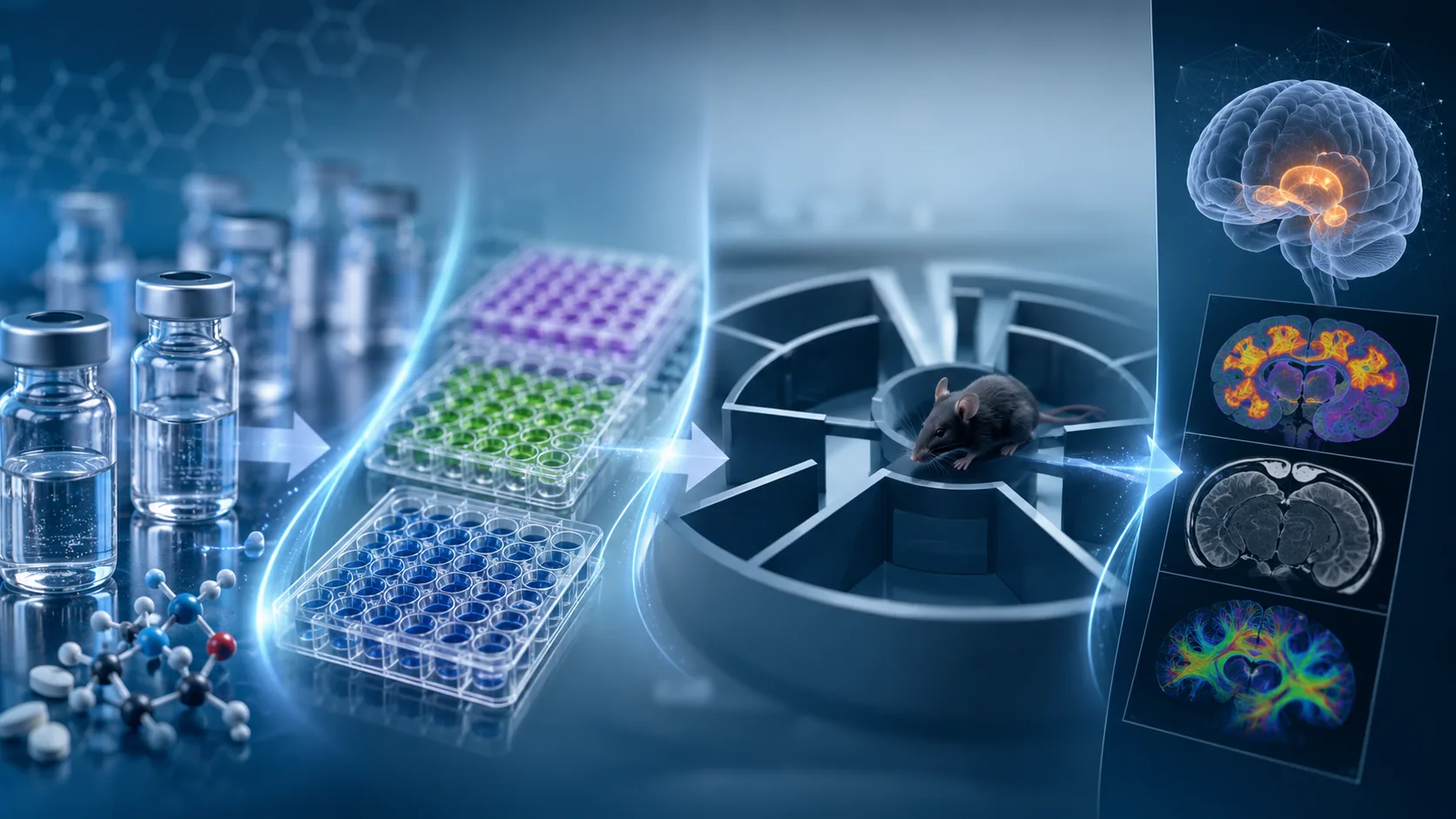
Phenotype first.Biology chooses the molecules.
Instead of starting from a single target, we screen for the cellular behavior we want to change, then design, test, and learn in one continuous loop.
Connected disciplines.One continuous loop.
Phenotypic screening, AI and molecular modeling, mechanism studies, and in vivo evaluation feed each other continuously. Evidence from any point can redirect the chemistry.
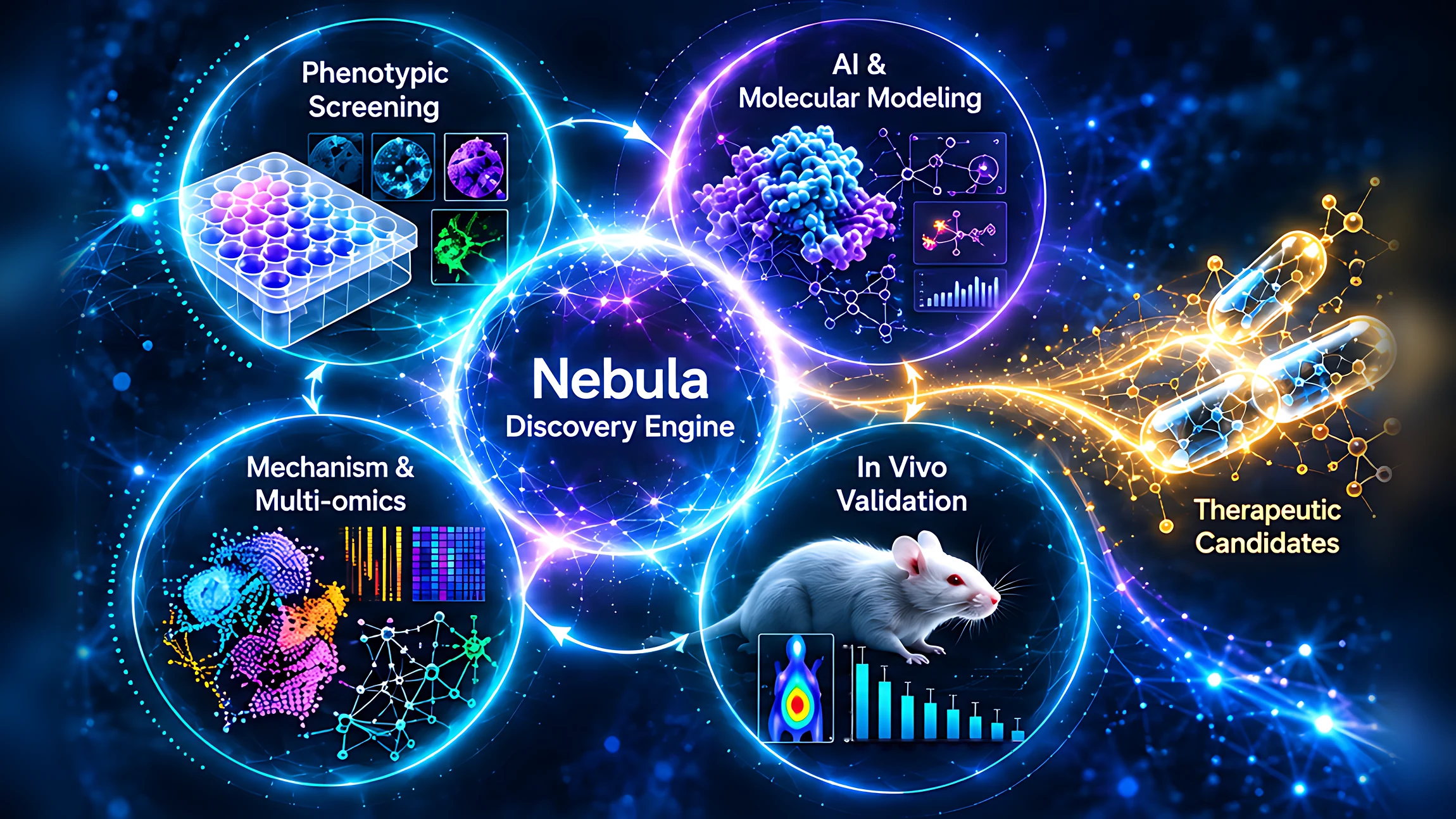
Built to workas one system.
Cellular and animal studies run alongside chemistry and modeling, not after them, so each result can shape the next decision.
Drug screening
Chemical-library screening and quantitative phenotypic assays.
Drug design
Medicinal chemistry and structure–activity relationships.
High-content imaging
Multiparametric analysis of cellular responses.
AI/ML discovery
Data-informed compound prioritization and experiment selection.
In vitro models
Cellular models of senescence, aging, and disease.
In vivo evaluation
Program-specific evaluation in appropriate animal models.
Disease context
Multiple cancers, including bladder, breast, melanoma, lung, and renal cancer; liver, lung, and kidney fibrosis; and neurodegeneration. Evaluation scope varies by program.
Every scalein conversation.
Chemistry, cell phenotypes, and whole-organism biology inform each other. Results in animal models can send us back to the bench as readily as cellular data move us forward.