
Go to the roots.See what connects.
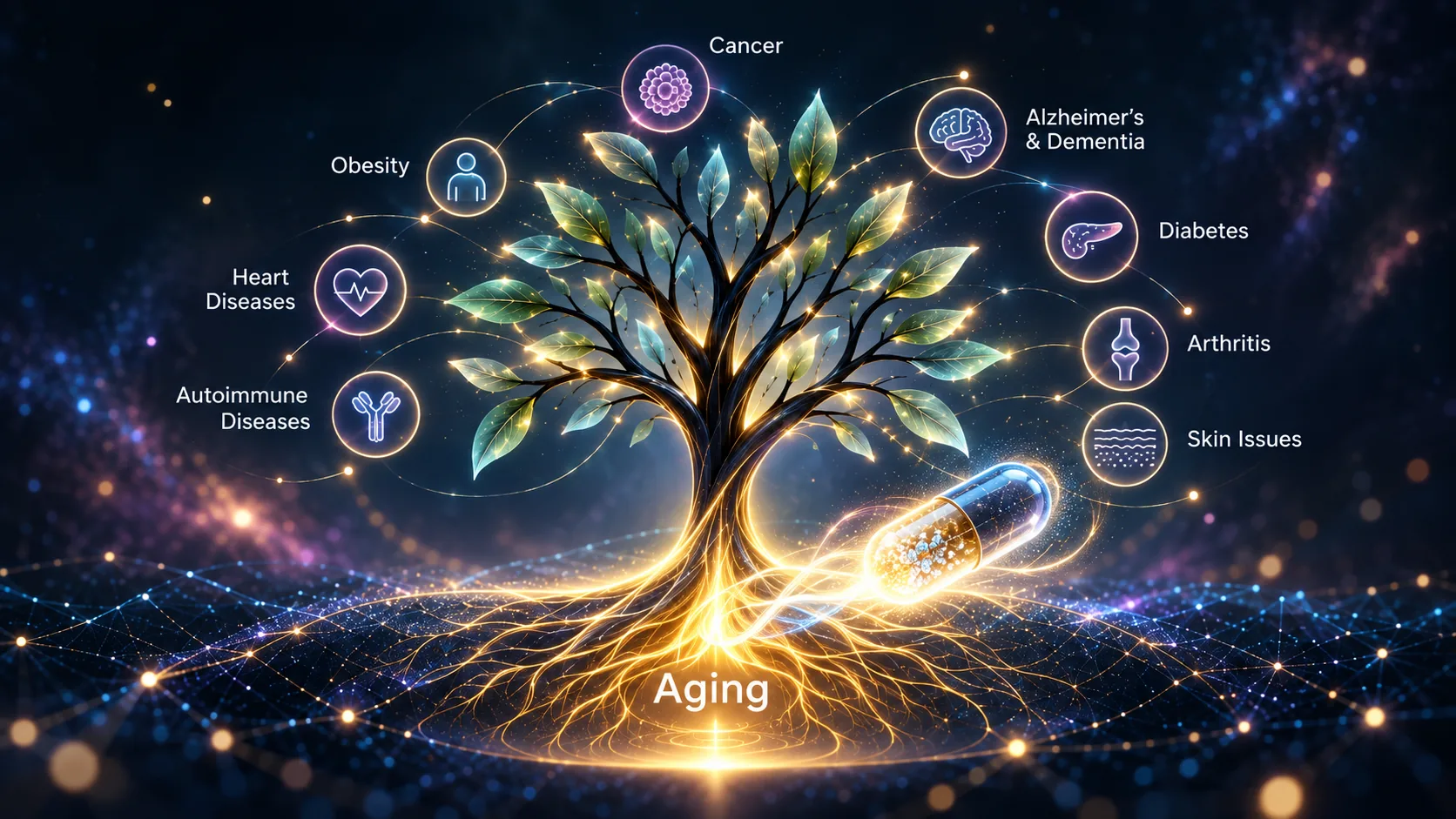
Aging is a major risk factor for many chronic diseases. Gerotherapeutics target biological processes that can contribute to dysfunction across tissues.
Different branches.Common roots.
Cellular stress, inflammation, and changes in tissue repair can influence several diseases at once. Understanding these connections creates opportunities to intervene upstream.
We apply this perspective to oncology, fibrosis, neurodegeneration, and healthy aging.
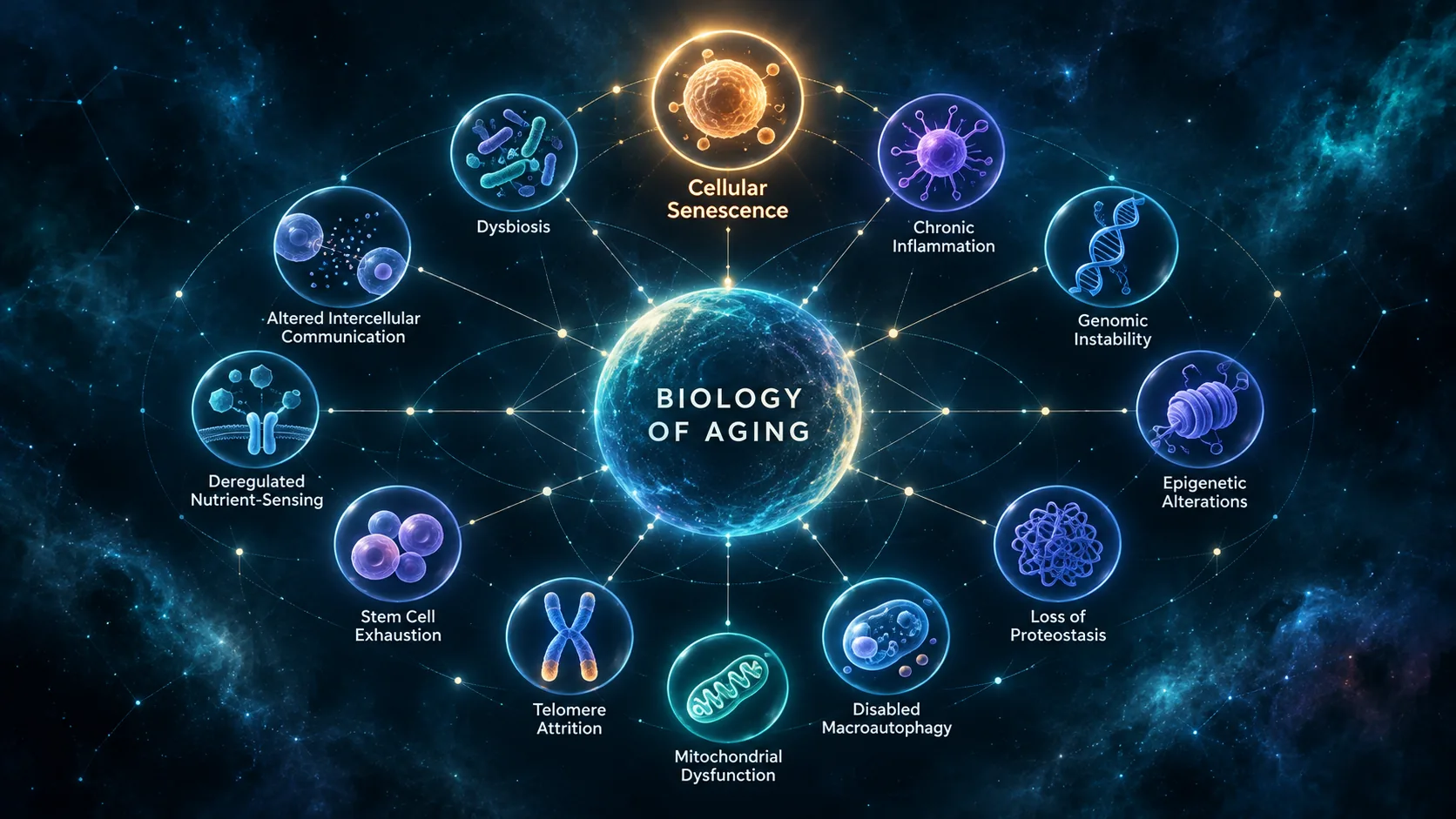
Cellular senescence is one of the best-characterized hallmarks of aging, and one of the most tractable for small-molecule medicines.
Cellular senescence
Senescent cells stop dividing and can accumulate with age, stress, or injury. Their signals can promote inflammation and alter surrounding tissues.
We discover senotherapeutics designed to selectively remove harmful senescent cells or modulate their activity.
Across tissues.
Across disease areas.
One biological process can create opportunities in oncology, fibrosis, neurodegeneration, and healthy aging.
Why thesediseases.
We prioritize settings where senescent cells are abundant, where their contribution to disease is well supported, and where patients need better options.
Oncology
Chemotherapy and radiation induce senescence in tumor and surrounding cells. Persisting senescent cells can promote inflammation, recurrence, and treatment resistance, which makes them a target alongside standard therapy.
Fibrosis
Senescent cells accumulate in fibrotic liver, lung, and kidney, where their secretions keep pro-fibrotic programs switched on long after the original injury.
Neurodegeneration
Senescent glial cells build up in the aging brain and are associated with neuroinflammation and decline in models of neurodegenerative disease.
Senescence is where we start,not where we stop.
Aging is driven by interconnected processes, from mitochondrial dysfunction to chronic inflammation. Our mission is gerotherapeutic discovery broadly.
The same phenotype-first engine that finds senotherapeutics can be pointed at other hallmarks of aging as the biology and the evidence mature.